How do you help job seekers stay organized, practice for the exact role they want, and walk away from every exercise with real proof of their skill, without making them stitch together five different tools?
Job seekers were already applying to a lot of roles while trying to learn new skills on the side. Applications were scattered across tabs, boards, and spreadsheets. Practice had nothing to do with the actual job. And when someone finished a project, there was no way to prove it was any good.
Goal: give every application something to do next, not just a status to check.
Capture from wherever you are
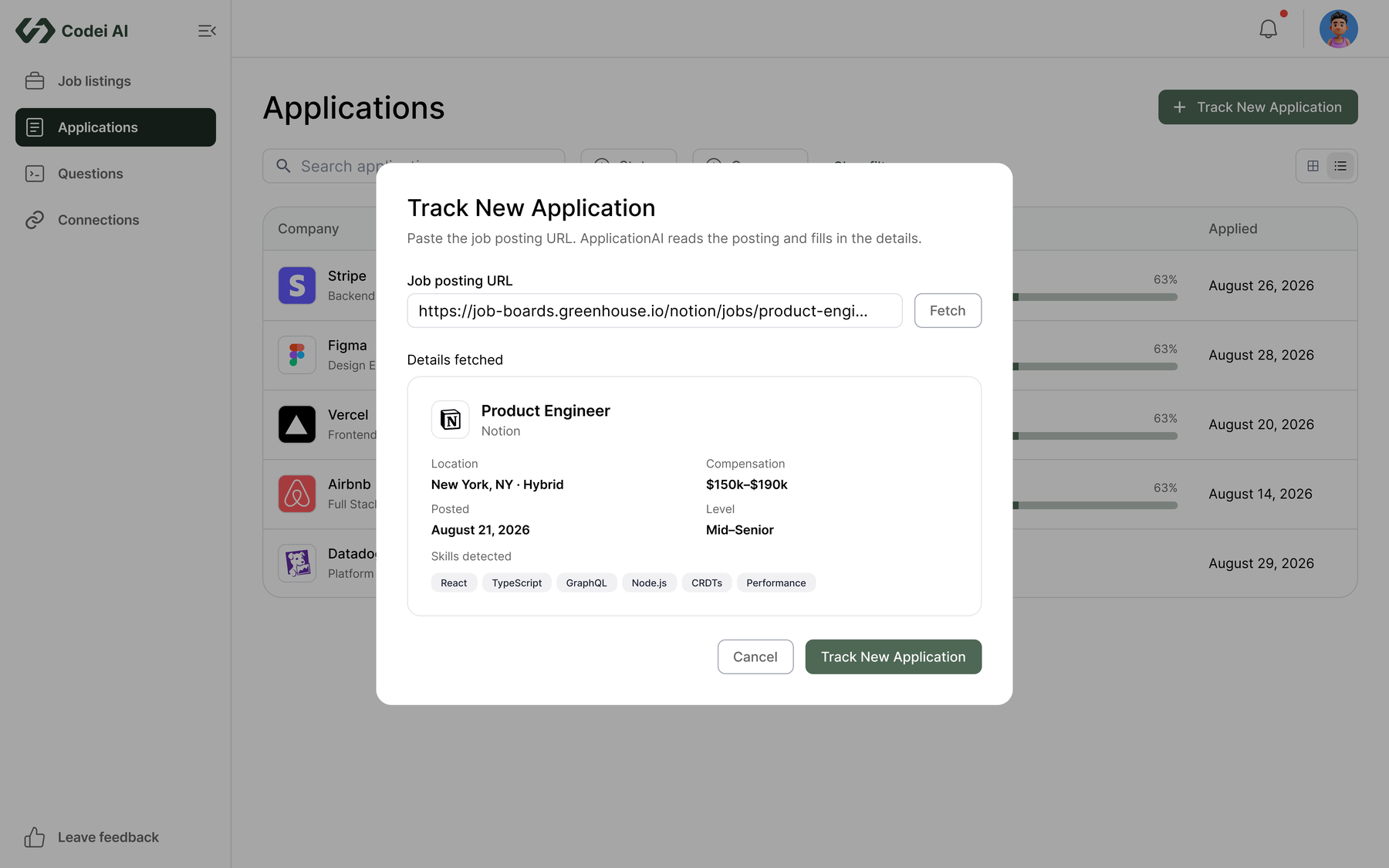
Save a job from wherever you find it, or track it directly inside Codei.
Practice shaped like the job
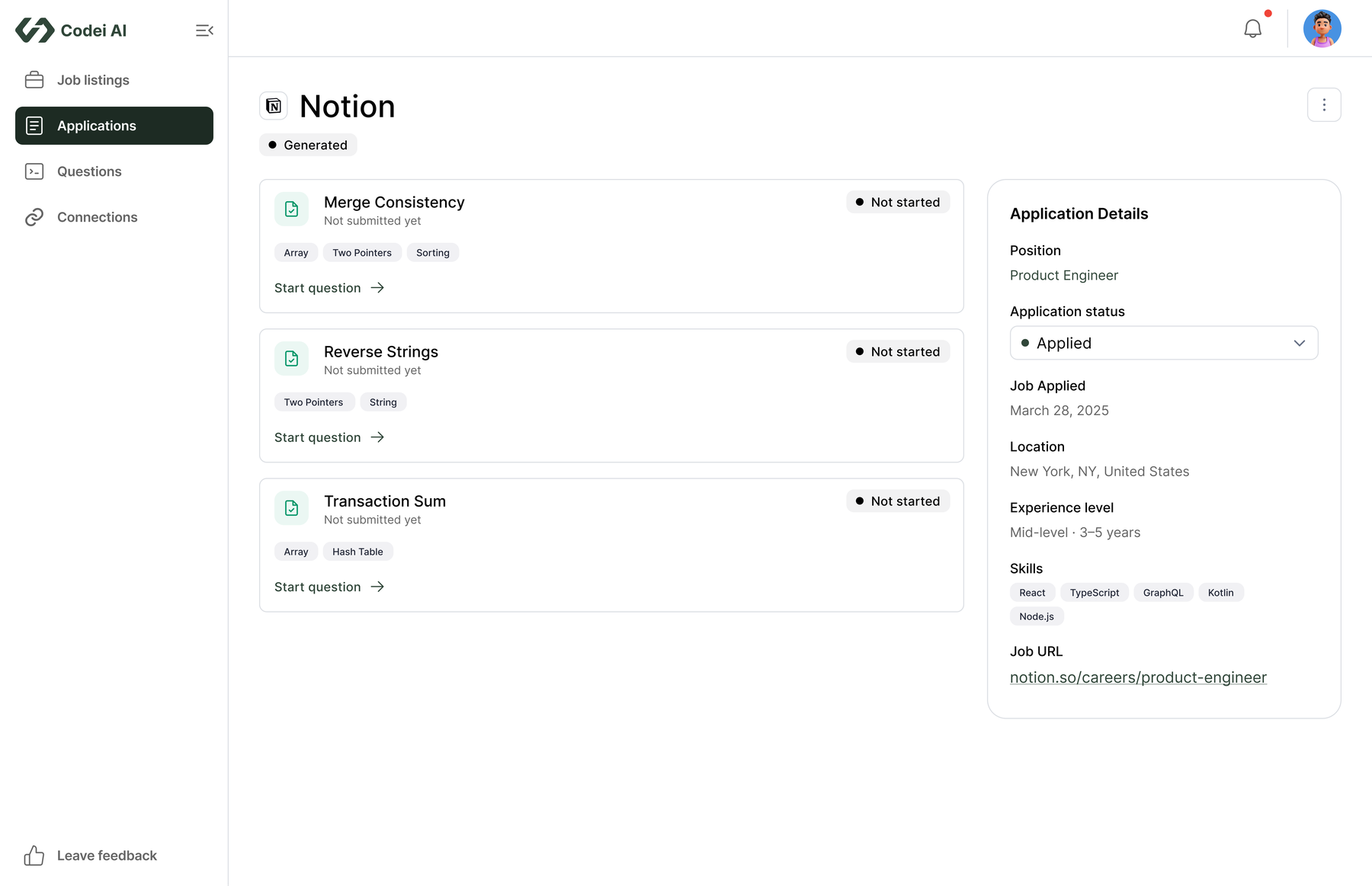
GitHub-project or LeetCode-style questions, generated from real skill tags.
Every exercise leaves you with something
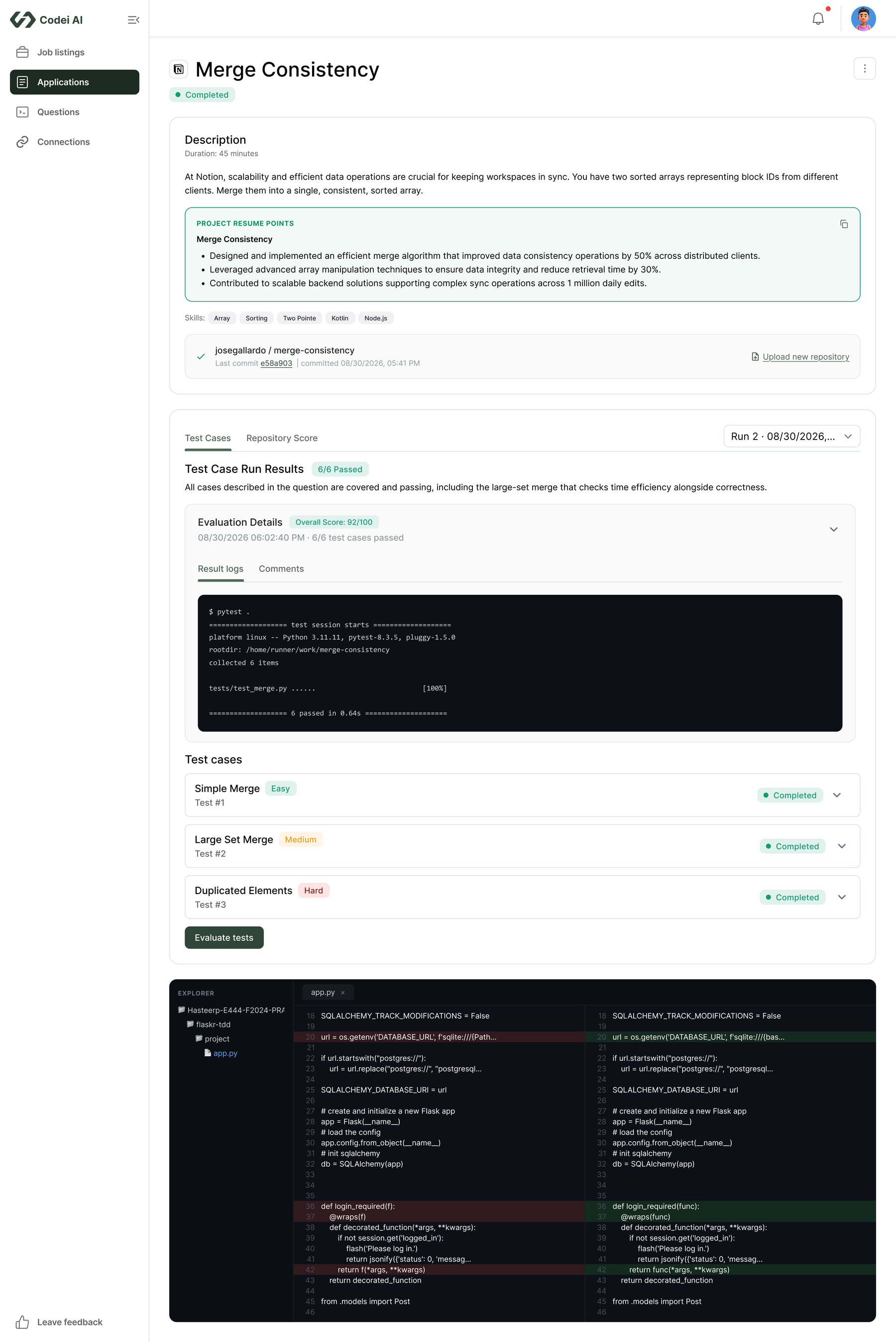
A line you can put on your resume, not just a checked box.
Real proof, not just a number
A real test run plus a written review, not just an AI's opinion.
Track It, Wherever You Find It
Applications were scattered across tabs, boards, and spreadsheets. And spreadsheets die within a week.
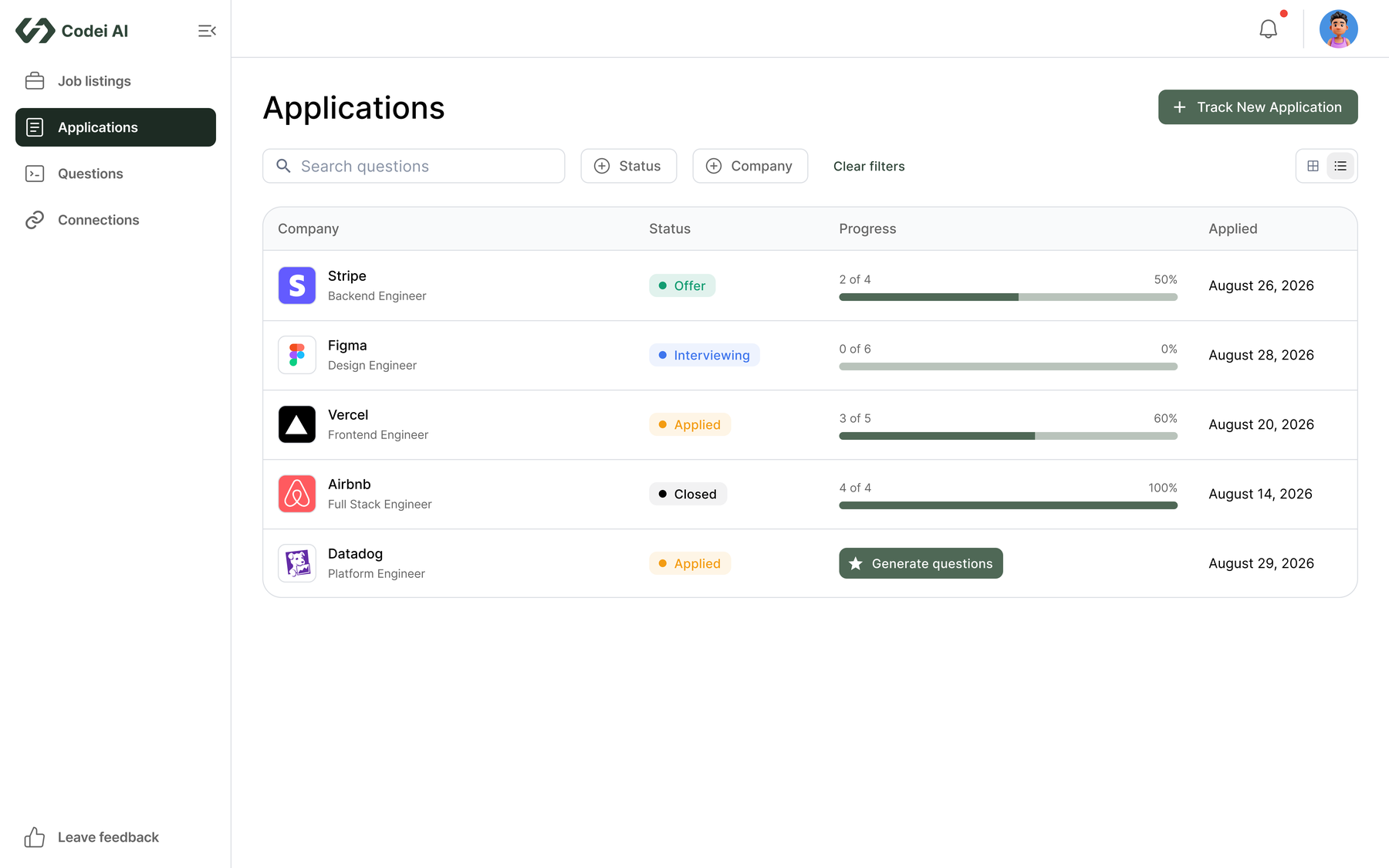
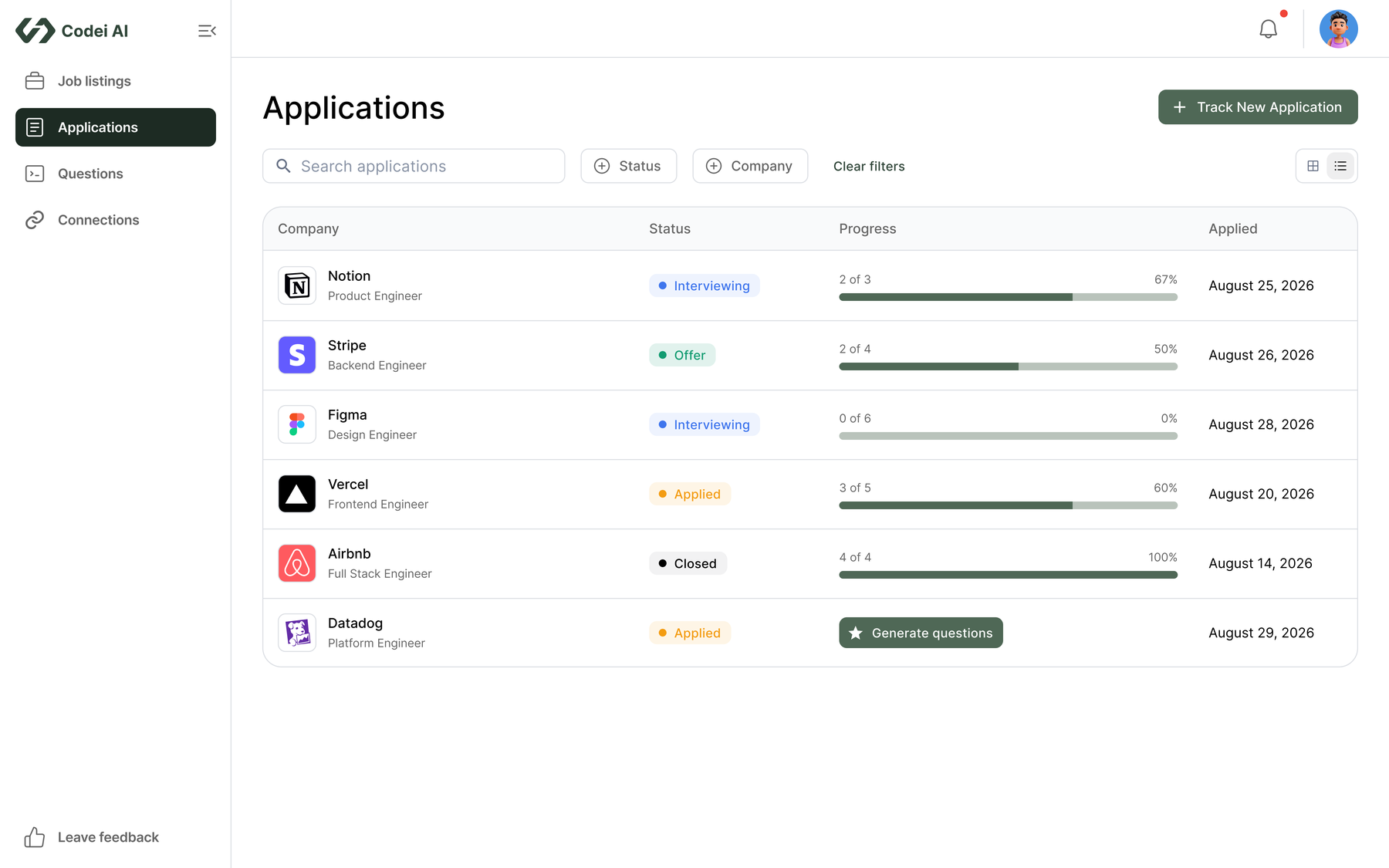
Save a job from anywhere, and it lands on one dashboard, already organized
You can browse and apply for jobs right inside Codei, or save one you found somewhere else with a single click. Before building this, I asked people how they already kept track of their job search. Most said tabs and spreadsheets. So instead of asking them to learn a new system, Codei just needed to take a job from wherever they found it and drop it onto one organized dashboard.
Practice Built for the Role, Not a Question Bank
Most interview prep has nothing to do with the job someone is actually applying for. There was no shortage of practice questions online, but none of them were tied to the skills a specific role actually needed.
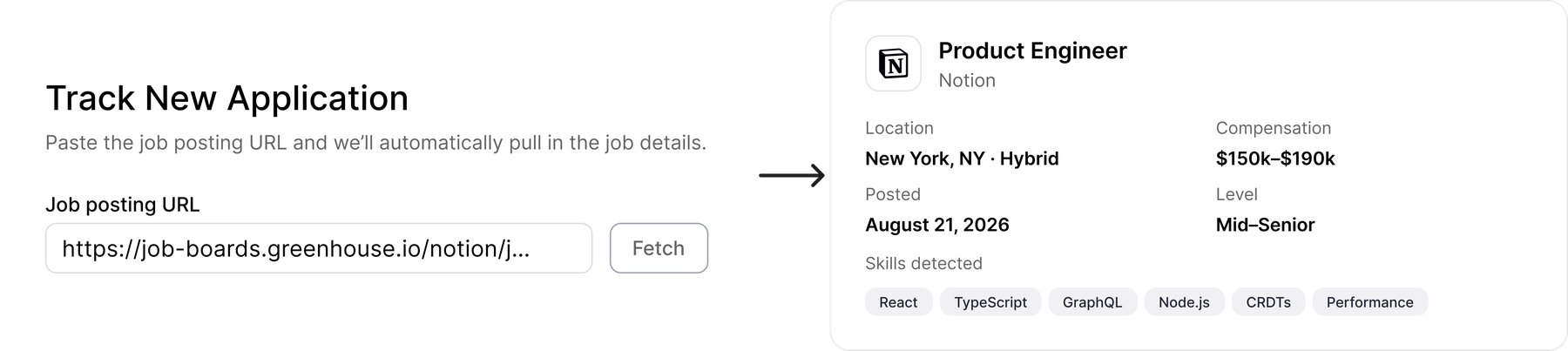
Questions generated from that job's actual skills
When you start practicing for a role, you choose between two kinds of questions: coding problems similar to LeetCode, or a small project built the way you'd build one on the job, closer to a real GitHub repository. Either way, Codei generates the questions from the skills listed on that specific job posting. I originally planned a bigger system with difficulty levels and streaks to track progress, but testing showed that two modes tied to the real job mattered more than a big generic question bank ever did.
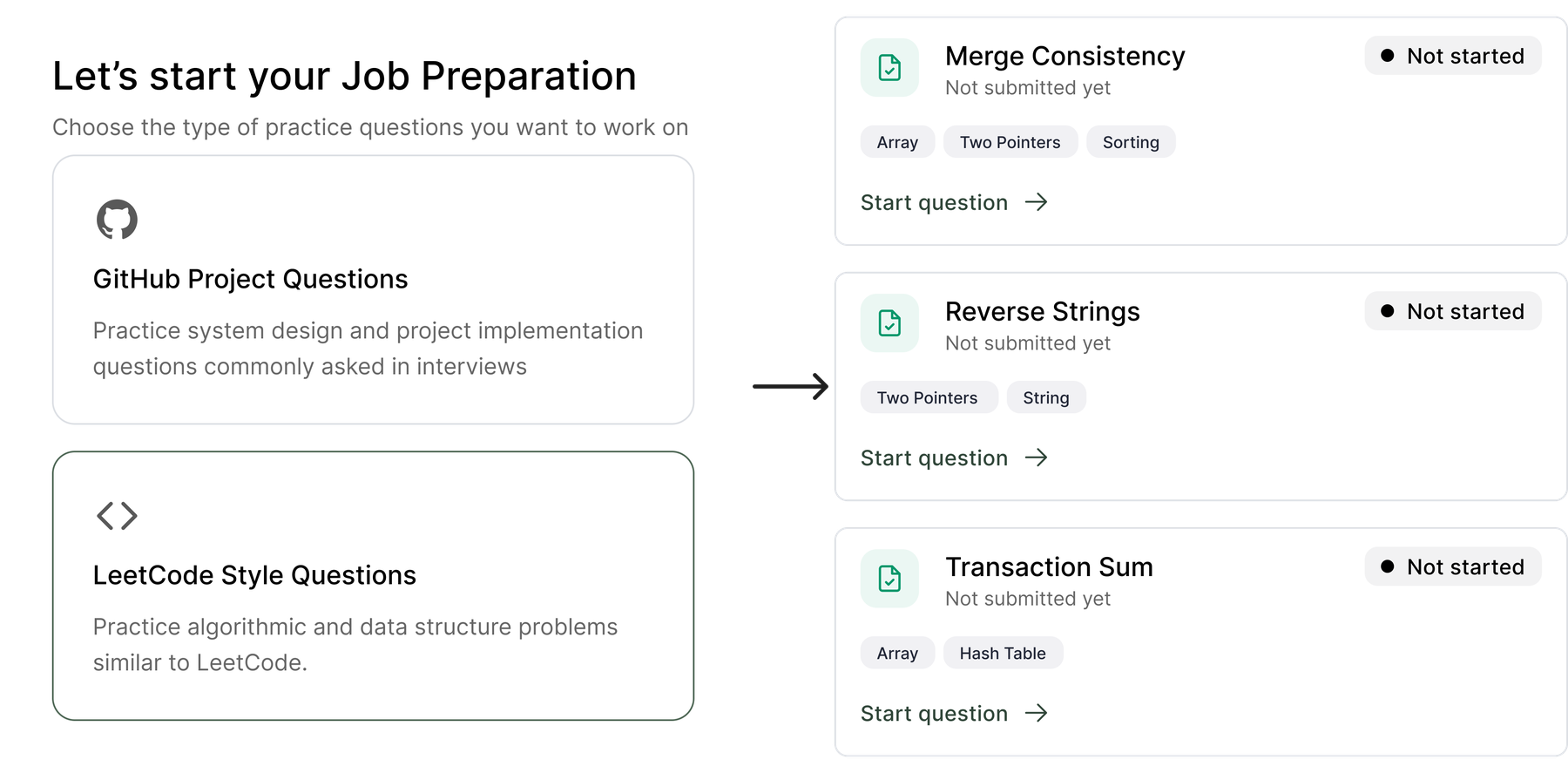
Every Exercise Writes Your Resume for You
Even after spending hours on a practice project, most people ended up with nothing they could actually use. The finished code sat in a repository nobody would ever look at, and turning that work into something worth putting on a resume took more effort than most people had time for.
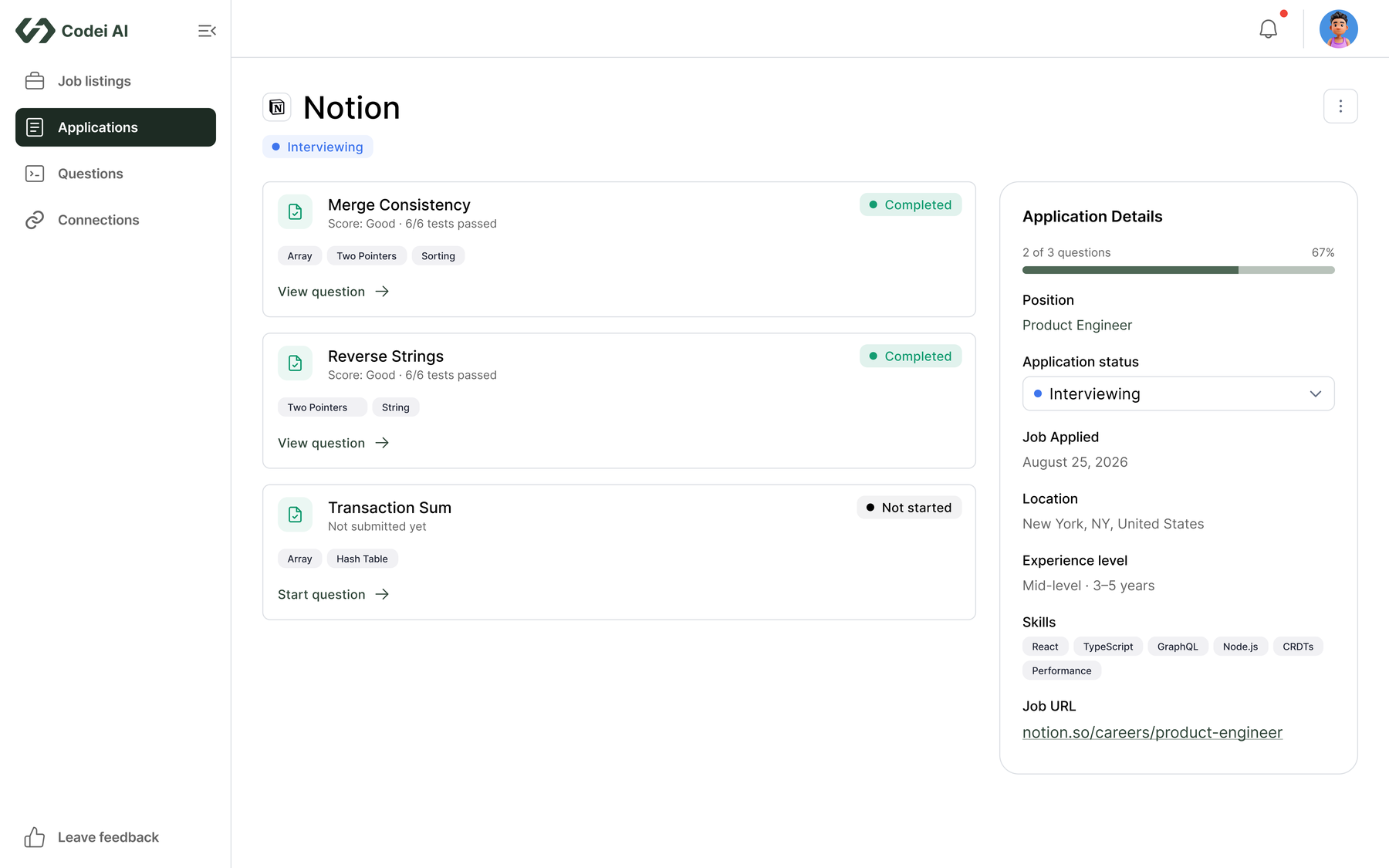
Resume-ready bullets, with real numbers, attached to the work
When you finish an exercise, Codei writes a short summary of what you built and turns it into resume bullet points, with real numbers pulled from your own work, like how much faster your solution runs or how many test cases it passes. You can copy these straight onto your resume instead of writing them yourself.
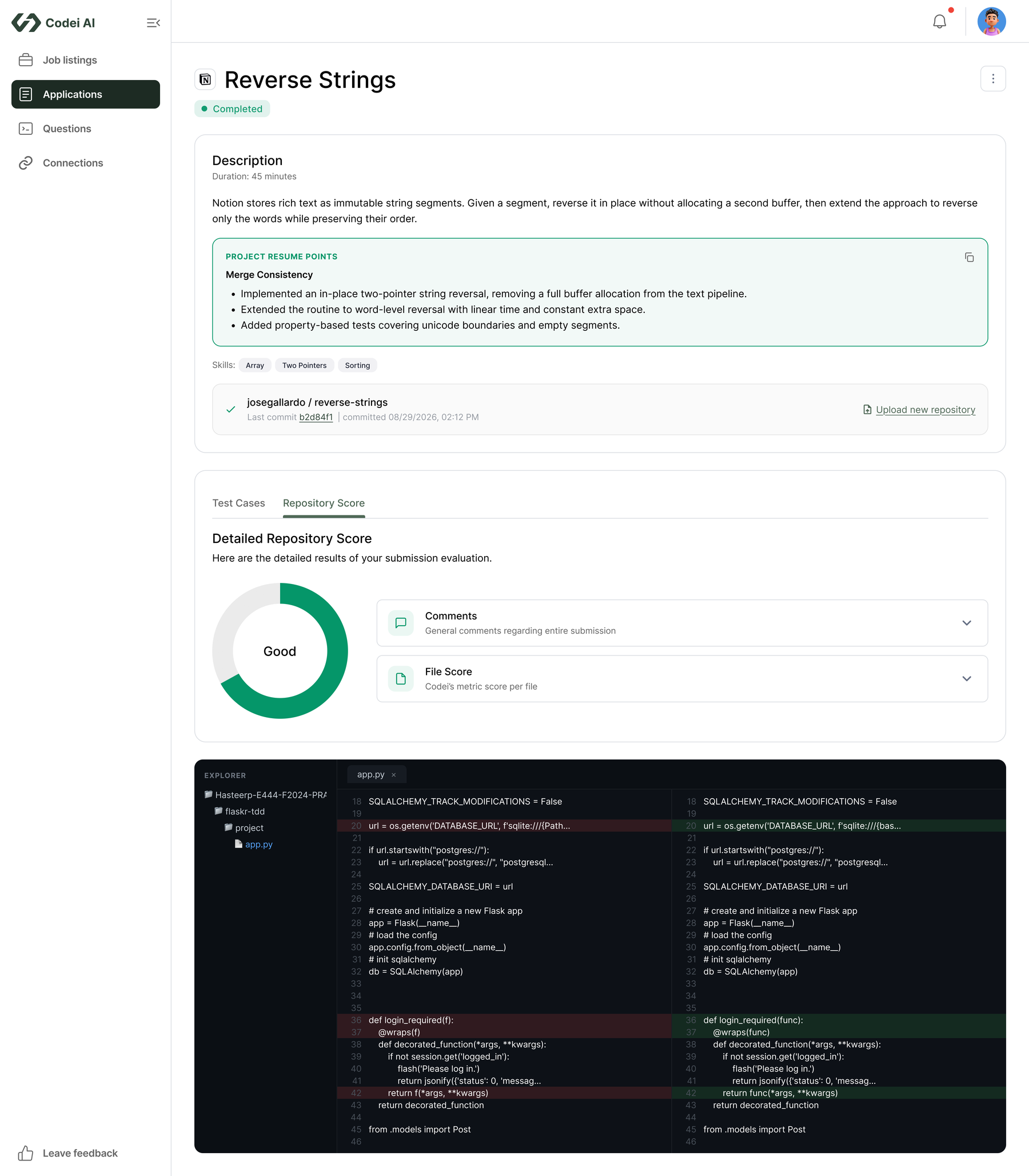
Proof, Not Just a Grade
Even after finishing an exercise, most people had no real way to know if their solution actually worked, or how it stacked up against what a hiring manager would expect from a working engineer. A green checkmark on its own doesn't prove much.
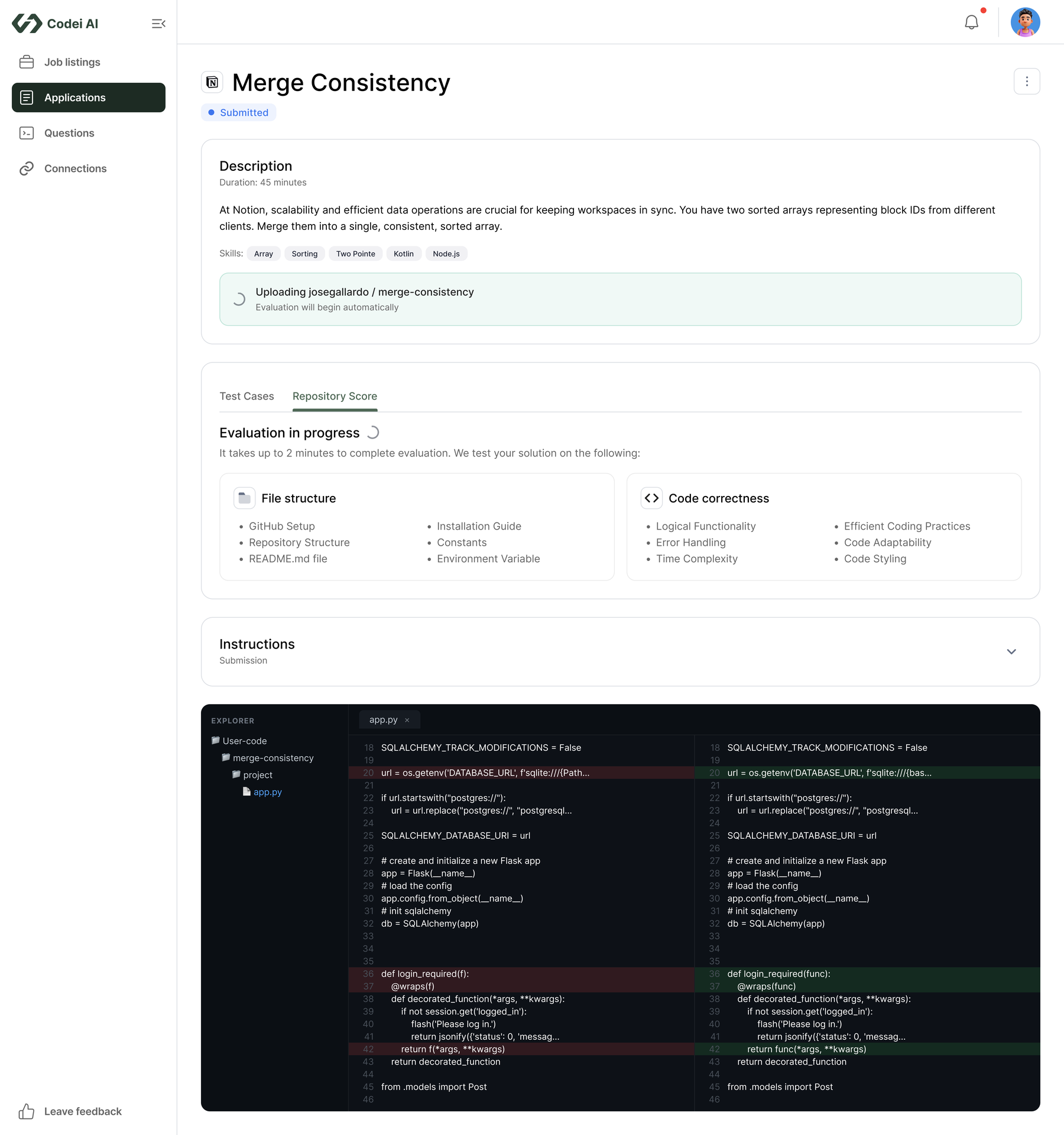
Real test results and a written review, not just a single AI score
When you connect your GitHub repository, Codei runs your code against real automated tests, the same way an engineer would check it before shipping. Alongside those results, it writes a separate review that calls out specific strengths and weaknesses in your solution. You walk away with real proof of what works, not just one number telling you pass or fail.
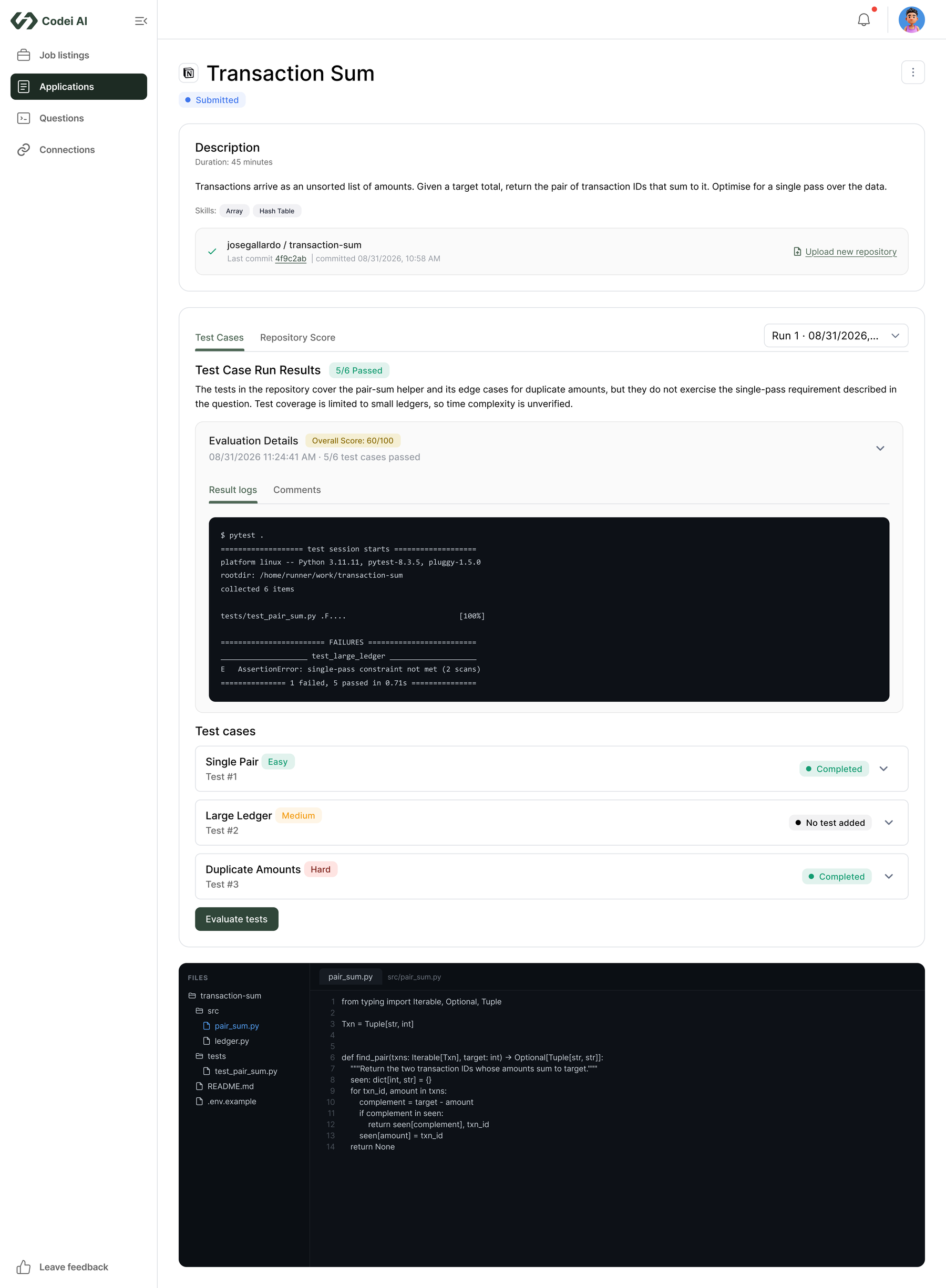
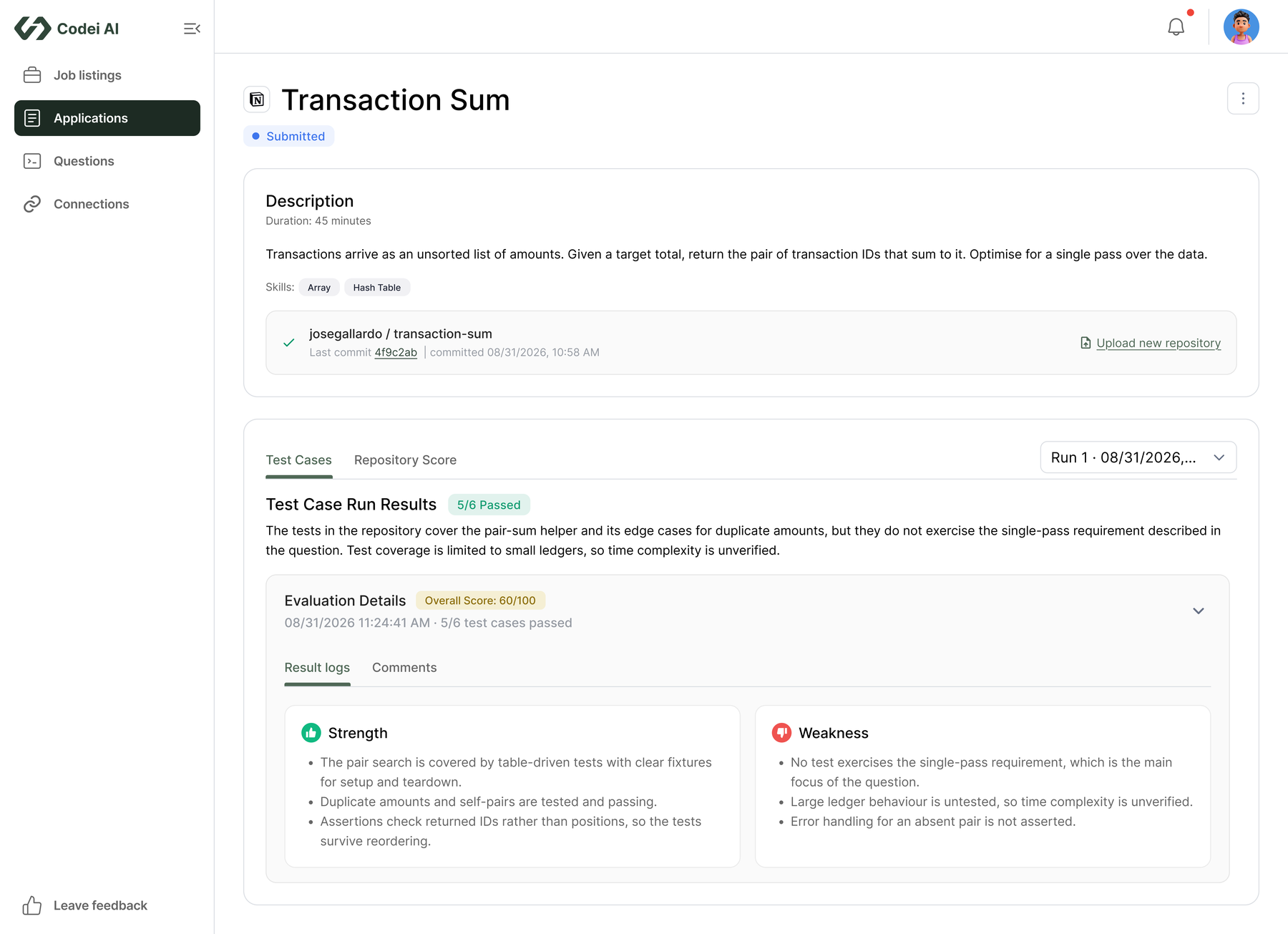
From Application to Evaluation
One path from start to finish: track an application, generate its questions, work through them, and get evaluated on real code. Step through it below.
Codei turned a passive job search into an active one.
Users left every session with something to show for it: a practice repo, a resume line, or a scored submission, instead of just an updated tracker.
Proof works better than a promise.
The feedback only felt trustworthy once it came with real proof, actual test results, not just an AI opinion. That combination is what turned it from a nice feature into the reason people stuck around.